- Spere - A Mindset & Performance Newsletter From Elliot Roe
- Posts
- 🔵 Stop chasing results

Sponsored by

The assistant that scales with you
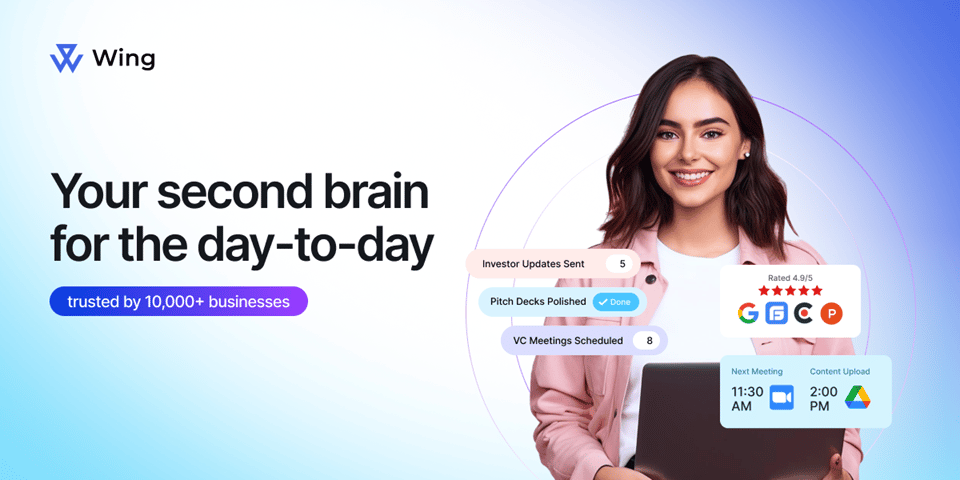
Great leaders don’t run out of ideas. They run out of hours.
Wing gives you a dedicated assistant who plugs into your workflows – calendar, inbox, research, outreach, and ops – so execution never stalls. Wing can:
Onboard in days, not months
Run the day-to-day so you don’t have to
Adapt as your business grows
With Wing, you buy back time without adding headcount. More focus for strategy, more follow-through on priorities, and a lot fewer “forgot to send” moments.
Deep Dive:
Stop Chasing Results
(And Watch Them Come To You)

By: Elliot Roe
You know that feeling right before a high-stakes moment?
Your stomach tightens. Your mind races through everything that could go wrong. You tell yourself, "I have to make this work," or "I need to nail this," or "This has to go perfectly."
And then you perform worse than you're actually capable of.
It's not a confidence problem. It's not a skill problem.
It's a focus problem.
You're chasing the result instead of executing the process. And that chase is exactly what's killing your performance.
Here's what you need to understand: The fastest way to improve your outcomes is to stop fixating on them.
The Shift That Changes Everything
Most people operate under a simple belief: Care more, try harder, get better results.
And on the surface, it makes perfect sense. Success requires effort, right?
But here's what's actually happening when you're overly focused on outcomes:
The outcome starts to be perceived as a threat by your subconscious. Every presentation becomes a referendum on your worth. Every sales call becomes a test of your value. Every competition becomes proof of whether you're good enough.
And when your subconscious perceives a threat, it does what it's designed to do: move you away from it.
Your nervous system floods with stress. Your thinking narrows. Your creativity shuts down. Your access to flow states disappears.
You perform worse, not better.
What Actually Works
Here's what the best performers understand that most people miss:
Care deeply about your process. Care very little about any single outcome.
The poker player makes the optimal decision with the information available, regardless of whether that particular hand wins or loses.
The athlete executes their technique with precision, regardless of whether they win that day's competition.
The entrepreneur takes the next right action, regardless of whether that specific deal closes.
This isn't apathy. It's not "not caring."
It's caring about the only thing you can actually control: What you do in this moment.
The Process vs. Outcome Distinction
Here's what this looks like in practice:
Outcome-focused thinking:
"I need to close this deal or I'm a failure."
"I have to win this game to prove I'm good enough."
"If this launch doesn't hit my revenue target, I'm not a real entrepreneur."
Process-focused thinking:
"I'm going to prepare thoroughly and execute my sales process with excellence."
"I'm going to show up fully present and perform my technique as precisely as possible."
"I'm going to run this launch according to my best strategic thinking and learn from the results."
See the difference?
The outcome-focused version makes your worth contingent on something you can't fully control.
The process-focused version emphasizes your efforts in terms of showing up and executing to the best of your abilities.
One creates anxiety. One creates excellence.
The Trap You Need to Avoid
Here's where this gets tricky:
Your subconscious might hear "focus on process, not outcomes" and use it to justify poor performances.
You keep falling short of your goals, but tell yourself, "It's okay, my process is good."
If you're consistently not getting the results you want, something about your process is wrong.
Outcomes matter. They're the feedback mechanism that tells you whether your process is actually working.
The point isn't to ignore outcomes. The point is not to let them hijack your performance.
Here's the difference:
Using process focus correctly: You execute your process with excellence, then evaluate the outcome objectively to improve it. You're detached during performance, but you're accountable after.
Using it as an excuse: You execute a mediocre process, get poor results, and tell yourself, "At least I focused on process." You're avoiding the accountability that outcomes provide.
The best performers are ruthlessly honest about their results. They use those results as data to refine their process. But they don't let the fear of those results contaminate their execution.
You can't hide behind "good process" if your outcomes don't follow.
That just means your process needs work.
How to Implement This
Shifting from outcome-focused to process-focused thinking isn't a one-time decision. It's a practice.
Here's how to start:
1. Define Your Controllables
Before any important performance moment, ask yourself: What is actually within my control here?
Not "What do I want to happen?" but "What can I actually control?"
Then commit to executing those controllables with excellence.
2. Reframe Outcomes as Data
Every outcome—win or lose, success or failure—is information about whether your process is working.
If you're consistently getting poor results, that's valuable feedback. It means your process needs adjustment.
Don't use "process focus" as a shield from accountability. Use outcomes to improve your process.
3. Practice Process Goals
Instead of setting outcome goals ("Make $100K this month"), set process goals ("Have 20 high-quality sales conversations").
You can control the process. You can't fully control the outcome.
Why This Works
Here's why this shift produces better results:
When you stop making outcomes mean something about your worth in the moment of performance, you remove the pressure that degrades execution.
When you remove that pressure, you perform better.
When you perform better, you get better outcomes.
Then you use those outcomes—good or bad—to refine your process further.
When you try desperately to win, you perform worse than when you focus on playing your best game.
When you obsess over hitting your revenue target, you make worse decisions than when you focus on serving your clients with excellence.
When you're attached to proving your worth, you perform worse than when you're committed to executing at your highest level.
But you still track your results and adjust accordingly.
What Changes When You Stop Chasing
Here's what happens when you make this shift:
You stop second-guessing yourself mid-performance because you're not worried about the outcome.
You make better decisions because desperation isn't clouding your judgment.
You bounce back faster from setbacks because they're just information, not identity threats.
And yes, you get better results.
Not because you stopped caring about success. But because you stopped letting the fear of failure control your actions.
The results you want aren't on the other side of trying harder to achieve them.
They're on the other side of focusing on what you can actually control: your preparation, your process, your execution.
Stop chasing. Start executing.
The results will come.
Your Next Step:
For the next week, pick one area where you're currently chasing results.
Identify what's actually within your control, and commit to focusing only on that. Track what happens to both your performance and your stress levels.
Primed Picks
🎯 Work with Our Coaches
Partner 1-on-1 with our Mindset & Performance coaching team to shatter plateaus and perform on-demand. Learn More and Apply
📱 Primed Mind App
Subscribe to Primed Mind and unlock 400+ Mindset Audios & Priming sessions. Get Started Now
♠️ A-Game Poker Book
Elliot’s blueprint for high-performance poker—learn the focus, tilt-proofing, and edge-maximizing tactics behind $250mm+ in earnings. Grab your copy
See you next week,
Elliot Roe